

29 Oct How to Prepare Your Gold Coast Home’s Electrical System for Storm Season
Storm season on the Gold Coast usually arrives with the heat of late spring and stays well into summer. One afternoon you are at the beach. By four o’clock the sky over the hinterland has turned black, the wind has picked up and the lights are flickering. Most homes come through these storms without trouble. The ones that don’t often had small electrical problems sitting quietly in the background, waiting for the right storm to make them worse.
Most storm preparation is simple, and you can do it well before the first warning goes out. Here is how to get your home’s electrical system ready, what to do when a storm hits and what to check once it has passed.
Key Takeaways
- Test your safety switches before storm season and fix any that fail.
- Surge protection at the switchboard guards your appliances against spikes when the power drops and comes back.
- Salt air and heavy rain are hard on outdoor power points, lights and switchboards in coastal suburbs.
- After a storm, stay away from fallen lines and wet electrical equipment. Have anything damaged checked by a licensed electrician.
Why Storms Are Hard on Your Electrical System
A storm puts pressure on your electrical system in several ways at once. A nearby lightning strike can send a spike through the power lines and into your home. When the grid goes down and comes back on, the sudden return of power can push a surge through anything still plugged in. Wind brings branches down onto service lines. Driving rain finds its way into outdoor fittings, roof spaces and meter boxes that were never fully sealed.
Gold Coast homes face an extra problem. In coastal suburbs, salt air slowly corrodes the metal parts in switchboards, outdoor power points and external lights. The corrosion often goes unnoticed until a heavy downpour pushes water into a connection that has already started to break down.
Test Your Safety Switches Before the First Storm
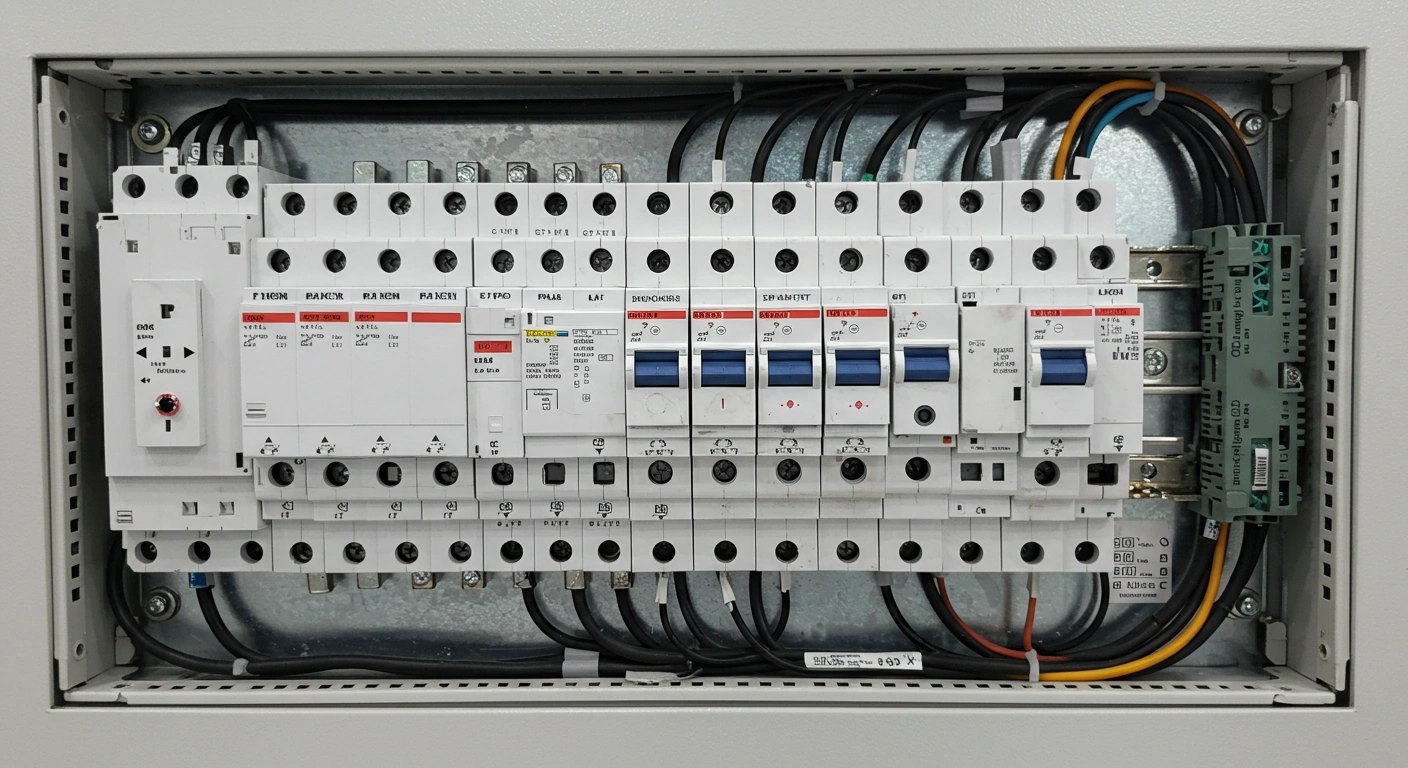
Safety switches are your main protection against electric shock when water and electricity meet. A safety switch monitors the current flowing through a circuit. If it detects a leak, such as current passing through a wet appliance or a person, it cuts the power in a fraction of a second.
To test your safety switches, open your switchboard and press the “T” or “Test” button on each one. The switch should trip straight away and cut power to the circuits it protects. Then reset it. Queensland’s Electrical Safety Office recommends testing every three months, and the start of storm season is a good reminder to do it.
A switch that doesn’t trip, or trips but won’t reset, needs attention before the wet weather arrives. The same goes for circuits that have no protection at all. Our safety switch testing and installation on the Gold Coast covers every circuit in your home, and faulty units are replaced on the spot. After a storm, a safety switch that keeps tripping is one of the most common reasons people call us. In most cases the switch is doing its job by cutting power to a circuit where water has got in, so resetting it again and again without finding the cause won’t fix the problem.
Add Surge Protection at the Switchboard
Power boards with built-in surge protection help, but they only protect what is plugged into them. A surge protection device fitted at the switchboard covers the whole home. That includes hardwired items like the hot water system, oven, ducted air conditioning and pool equipment. It works by sending excess voltage safely to earth before it reaches your appliances.
Surge protection won’t stop a direct lightning strike, so it still makes sense to unplug sensitive electronics when a severe storm is close. What it does reduce is the damage from the everyday spikes that come with storms and grid restarts. If your switchboard is older or already full, an electrician can tell you whether it has room for a surge protector or whether an upgrade makes more sense.
Check Outdoor Power Points, Lights and Equipment
Walk around the outside of your home and look at every outdoor power point, light and electrical fitting. Check for:
- Cracked or missing weatherproof covers
- Rust or a white, powdery buildup on metal fittings
- Garden lights or cables sitting where water pools
- Extension leads left running outside
Pool pumps, outdoor air conditioning units and patio fans deserve a look too. A damaged or corroded outdoor fitting should be replaced before the wet season rather than after it fails.
Clear Hazards Around Power Lines
Look at the service line running from the street to your home. Overhanging branches can snap in strong winds and bring the line down with them. If branches are touching or close to the line, don’t cut them yourself. Working near live lines is dangerous, so contact your electricity distributor or an approved tree contractor.
Tie down or store outdoor furniture, trampolines and anything else the wind could throw into lines or meter boxes.
Have a Plan for Power Outages
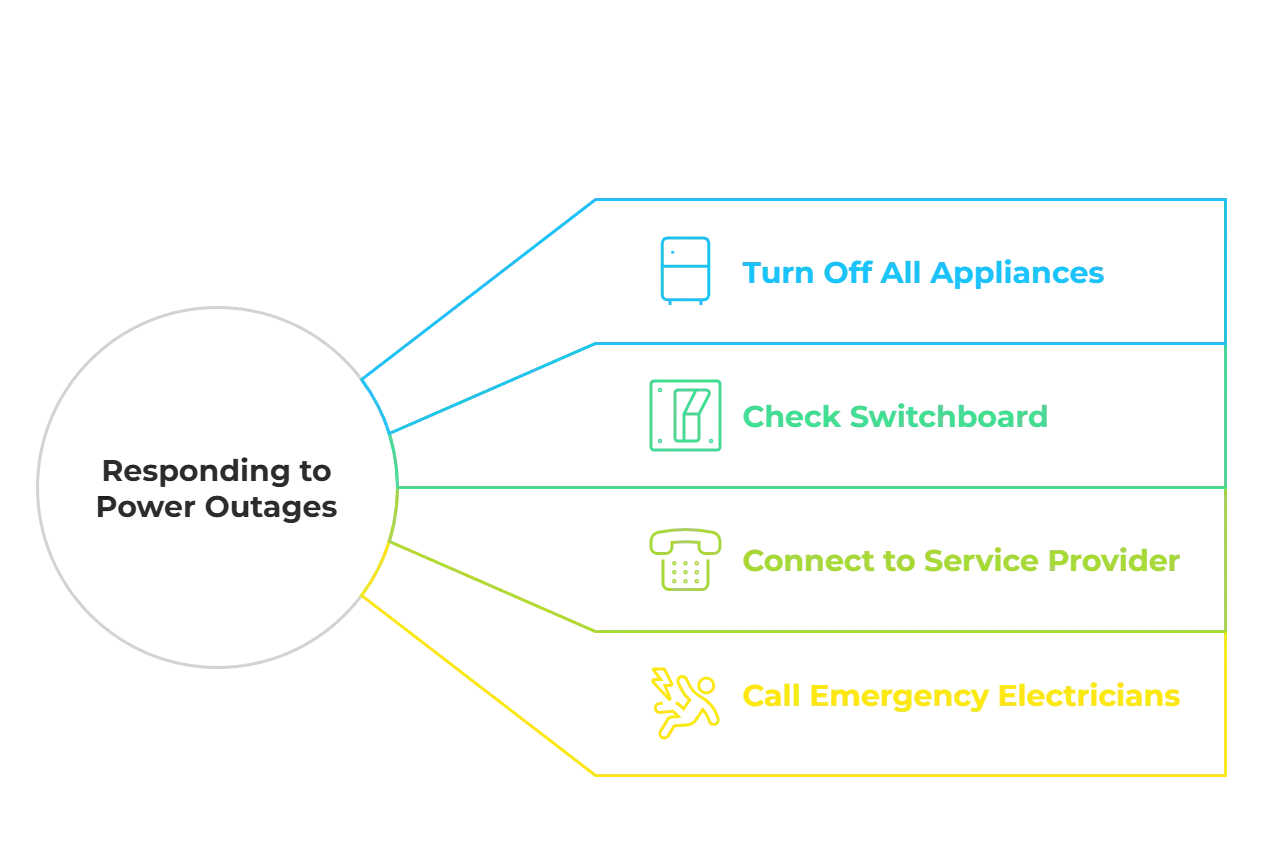
Storms often cause blackouts, so keep a few basics ready: torches with fresh batteries, a charged power bank and a list of important phone numbers. If anyone in your home relies on medical equipment, plan a backup well before the season starts.
If you use a portable generator, never plug it into a power point to feed the house. Doing this can send power back along the street lines and put line workers at risk. A generator should only connect to your home through a changeover switch fitted by a licensed electrician.
What to Do During a Storm
- Unplug TVs, computers and other sensitive electronics when a storm is close.
- Stay off corded phones and away from taps and baths during lightning.
- If the power goes out, switch off major appliances so they don’t all start at once when power returns.
- Leave one light switched on so you know when the power is back.
Safety Checks After the Storm
Once the storm has passed, look around carefully before anyone goes outside or starts the clean-up.
- Stay at least 8 metres away from fallen power lines and treat them as live. Report them to Energex on 13 19 62.
- Don’t touch switchboards, power points or appliances that have been wet.
- If water has entered the house, roof space or switchboard, turn off the main switch only if you can reach it safely while staying dry. Have a licensed electrician inspect it before you turn the power back on.
- Have any appliance that has been under water checked by a qualified technician before you use it.
- If you have solar panels or a battery, stay away from them and have a licensed solar technician check the system.
Some storm damage isn’t obvious at first. Lights that flicker, a burning smell, buzzing from the switchboard or a safety switch that keeps tripping can all point to a hidden problem. Treat these as urgent rather than waiting to see if they settle down.
Get Your Home Storm Ready With MCH Electrical
MCH Electrical is a family-owned Gold Coast electrician, and our licensed team can test your safety switches, inspect your switchboard and fit surge protection before storm season gets going. If a storm has already caused damage, we offer 24/7 emergency call-outs across the Gold Coast. Contact us for a free quote, or call 07 5665 7013.